Centralizing Identity: Navigating a Multi-Agency Brand Realignment
Context
As key ministries under the Catholic Charities umbrella, St. Patrick Center and Marygrove operated with dated, illustrative identities that felt siloed. This fragmentation made the agencies appear disconnected to donors and the community, obscuring the scale of their shared mission.
Goal: Centralize the visual identity for both agencies to create a cohesive presence while modernizing legacy symbols.

Discovery
Insights: Through stakeholder discovery sessions, we identified that donor and client trust was rooted in specific legacy symbols: the shamrock for St. Patrick Center and the community tree for Marygrove.
Pivot: We realized that individual agency updates couldn't happen in a vacuum. To truly centralize, the new identities needed to reflect a broader partnership with sister agencies like Good Shepherd Children & Family Services and Queen of Peace Center.
Execution
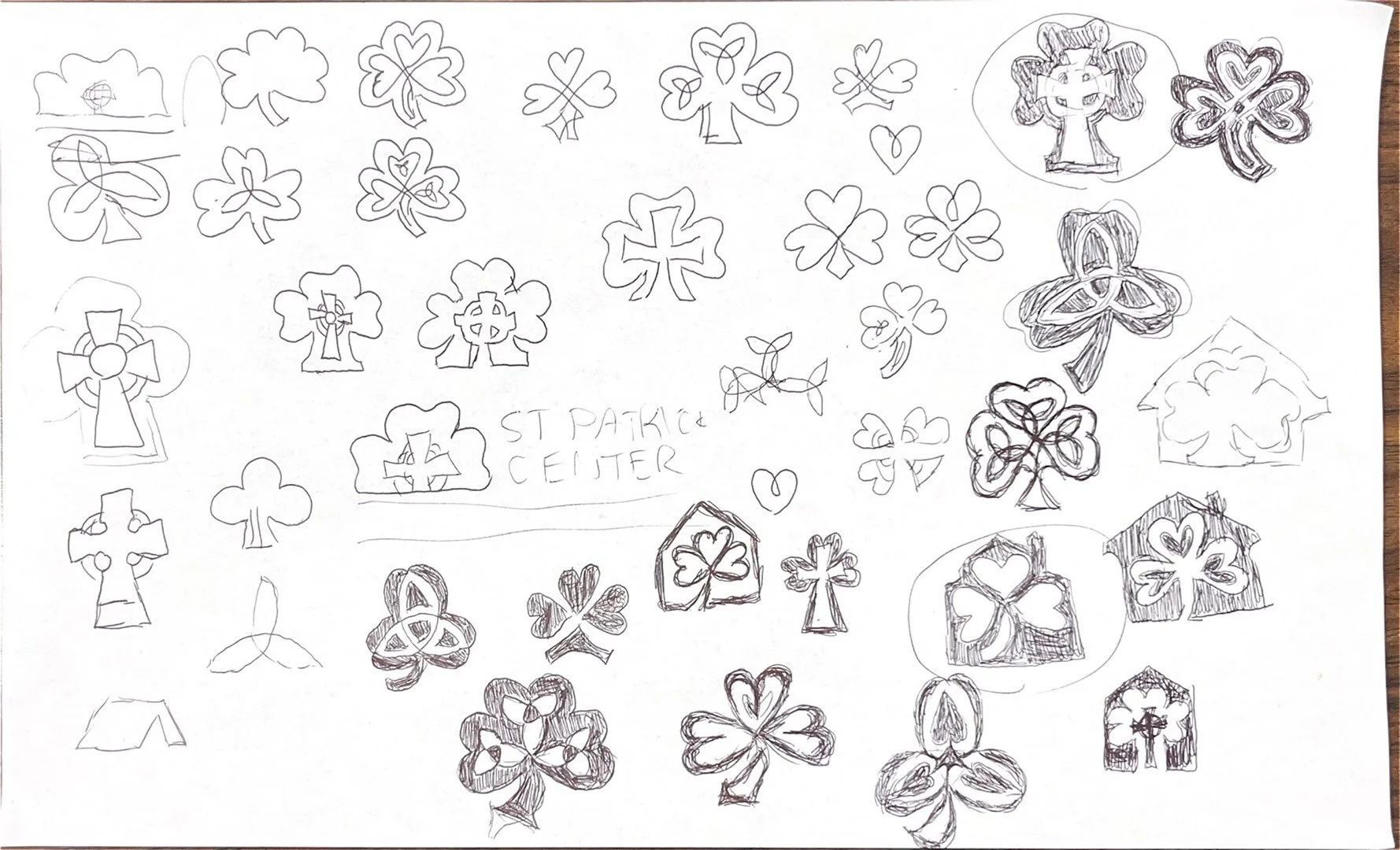
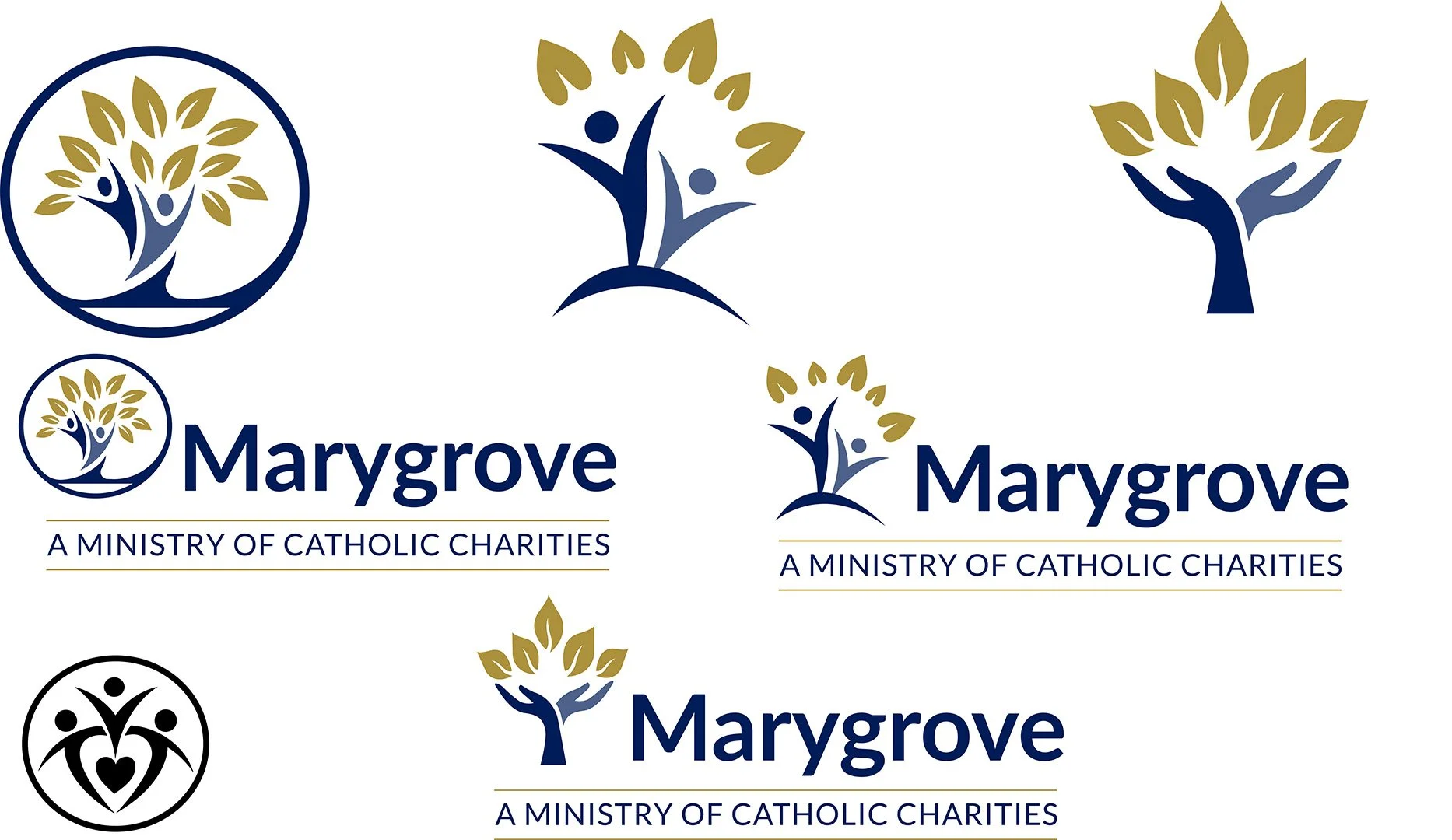
Iterations: I explored dozens of iterations for St. Patrick Center, testing various combinations of the shamrock, cross, and "housing" symbolism. For Marygrove, I focused on enclosing the "people-tree" within a circle, a direct strategic move to mirror the recently updated Good Shepherd logo and visually signal their shared service lines.
Rationale: All designs were built to function across a vast range of mediums, from tiny social media icons to large-scale event signage. We utilized the pre-defined Catholic Charities color palette to immediately ground both agencies within the parent brand's authority.
Collaboration: I worked closely with Development departments and Board Members, facilitating concept testing to see how each option resonated with core supporters. I synthesized their feedback to refine the marks into their final, unanimous forms.

Outcome
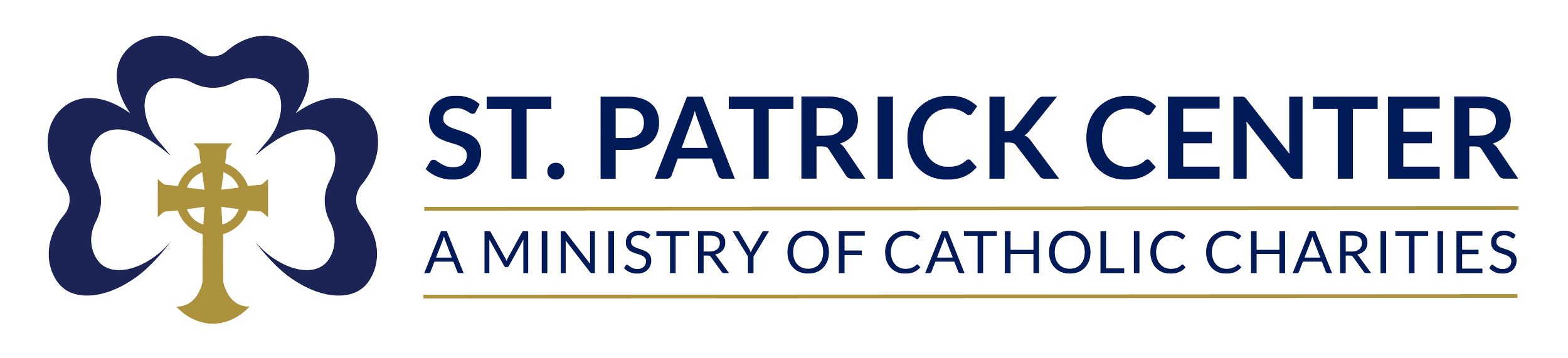
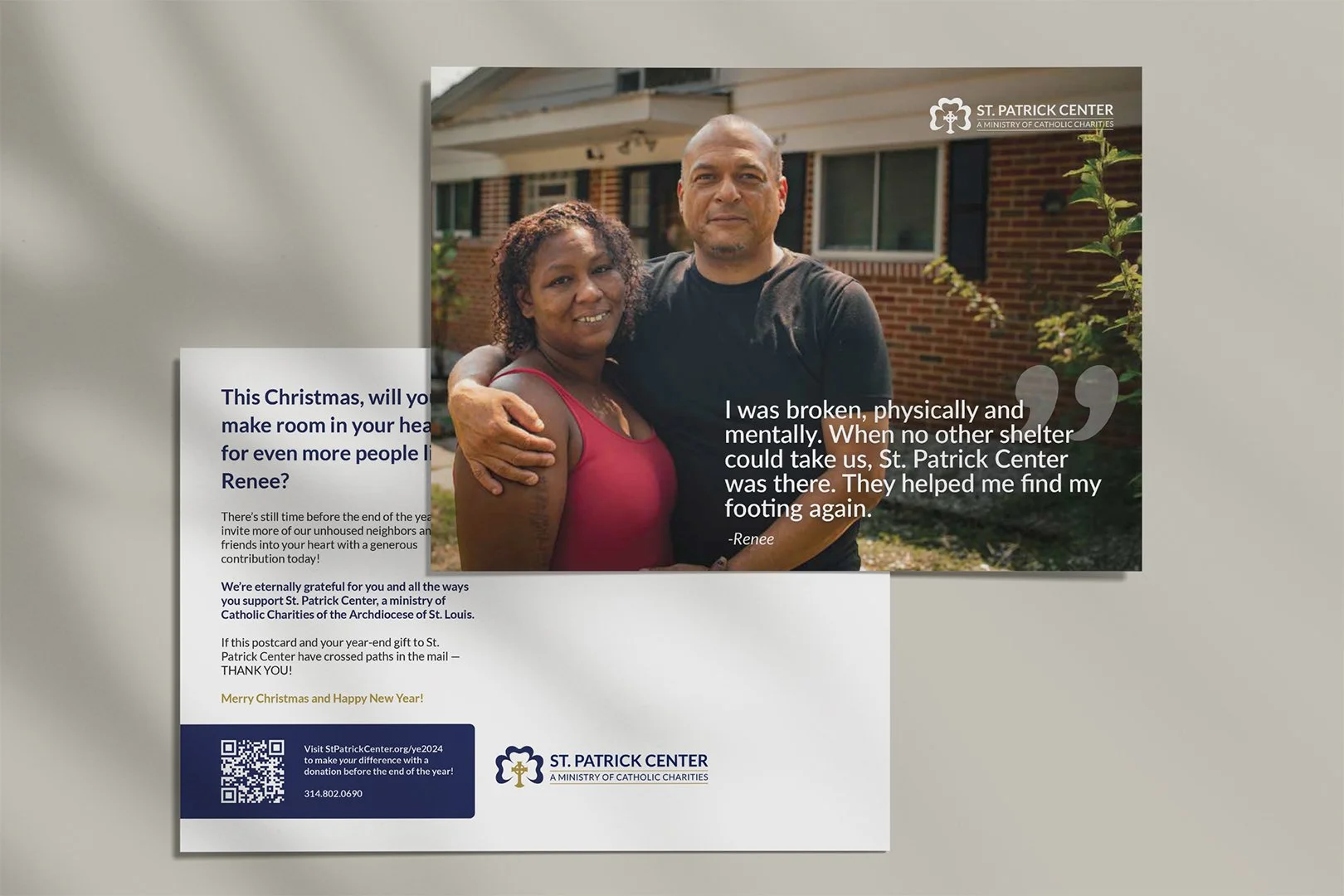
I successfully centralized the branding for two of St. Louis's largest nonprofits, resulting in a unified approach to philanthropy and community engagement.
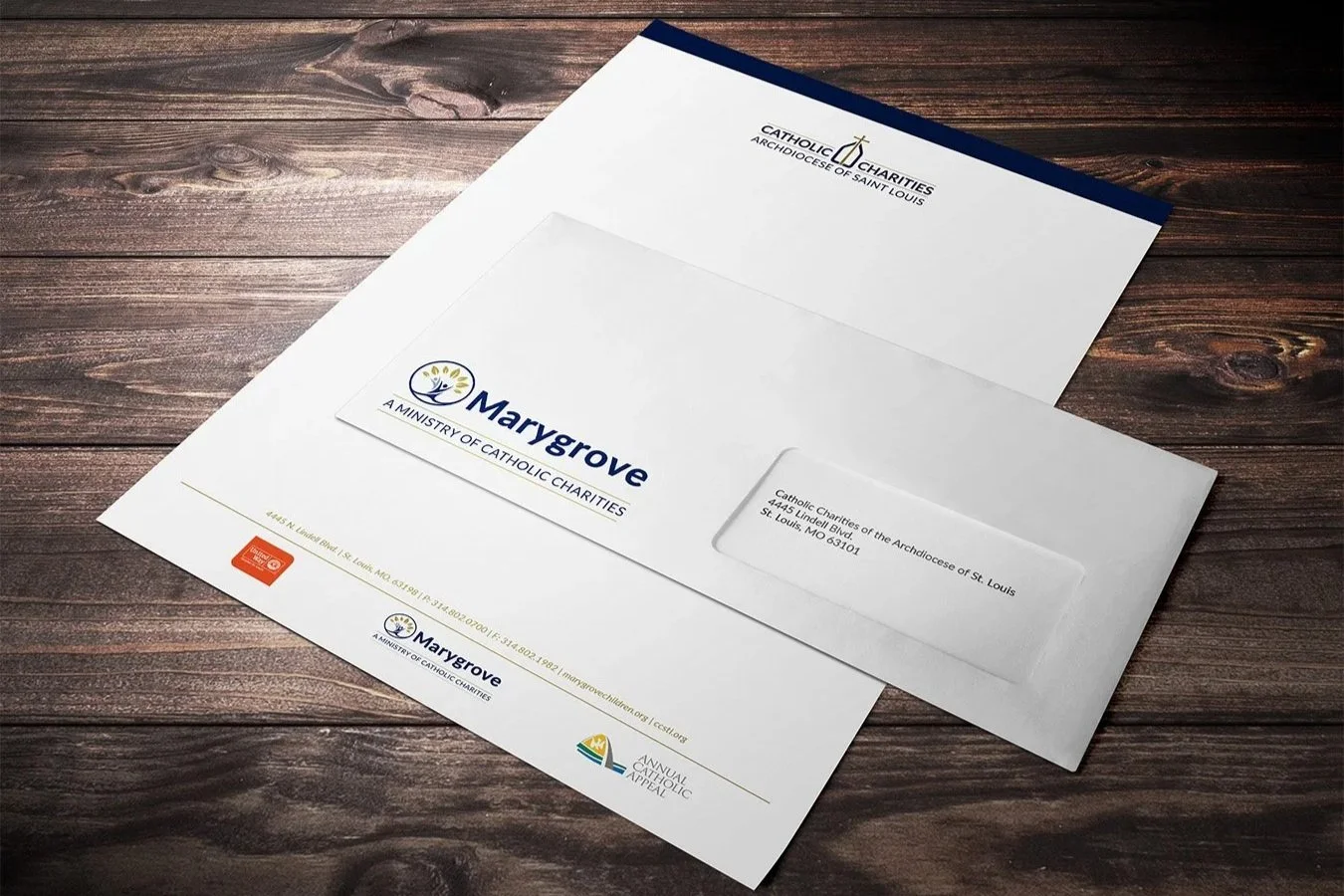
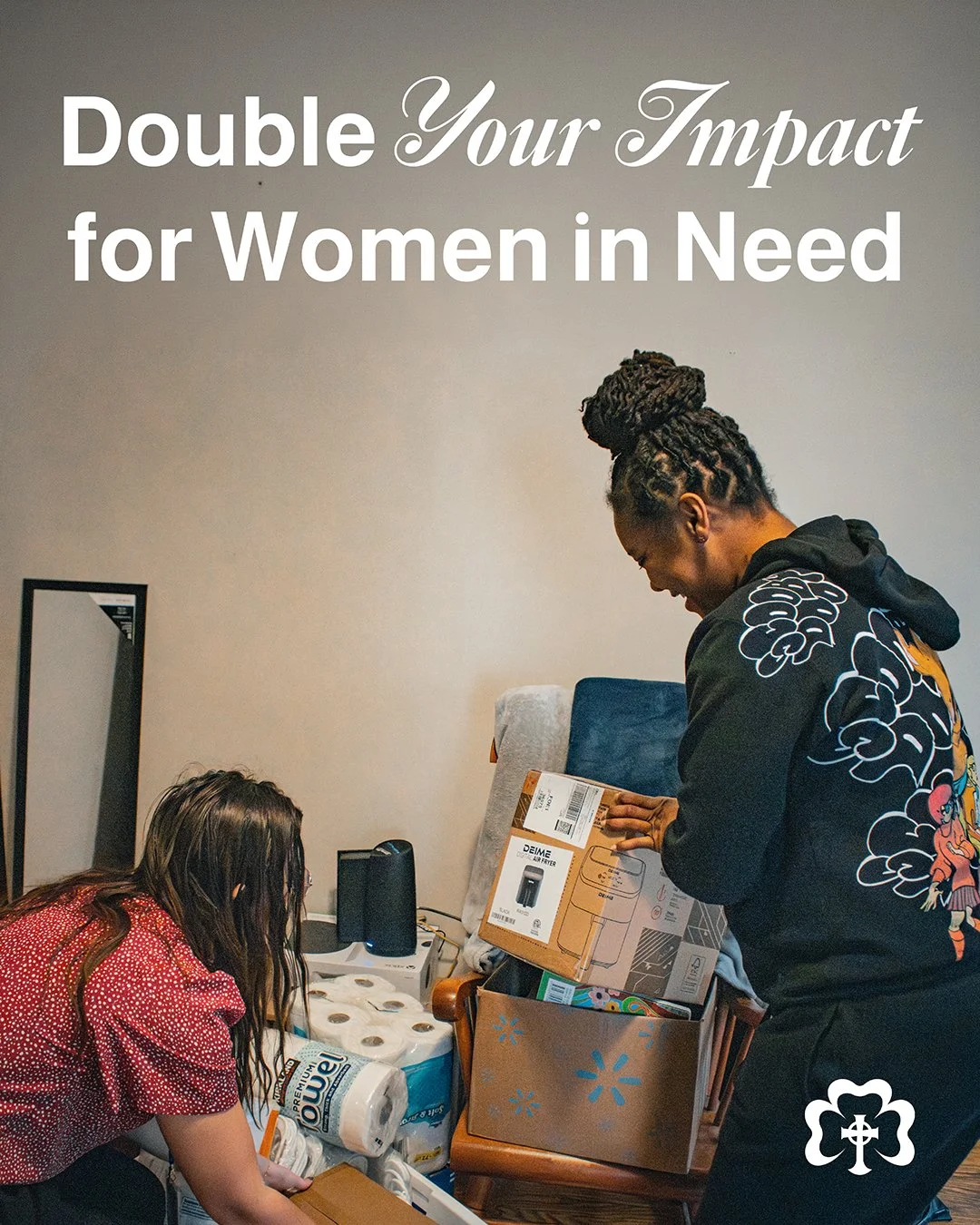
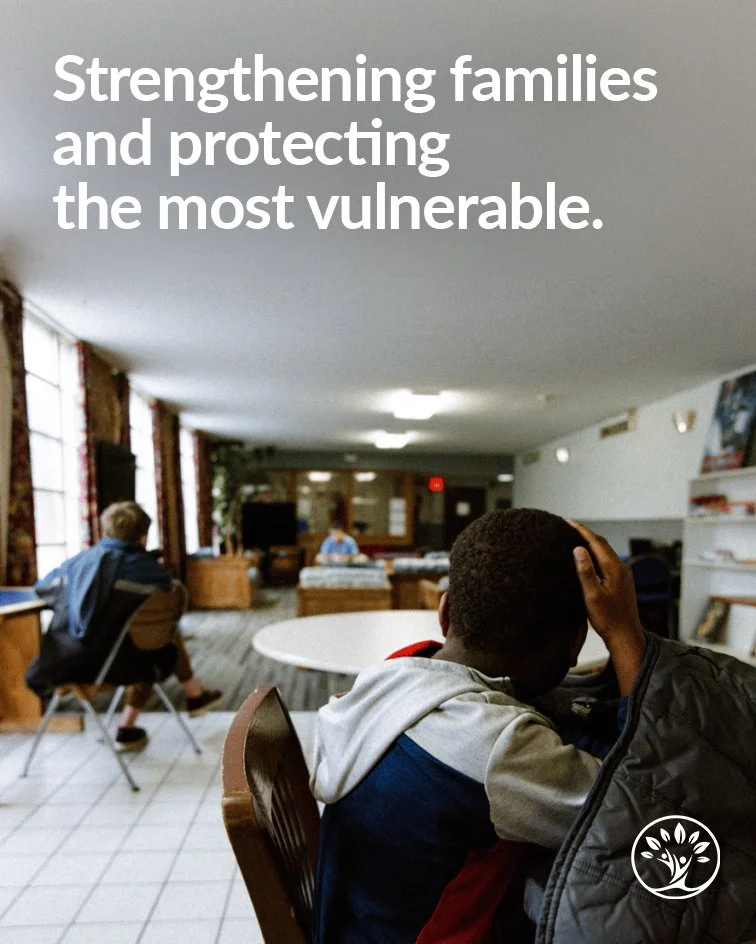
Beyond a comprehensive brand identity guide, we had the "turn-key" rollout of all new collateral, including a full website redesign, social media kits, and a complete overhaul of all integrated print materials.
Reflection
Lessons: This project reinforced that effective design is not a product of personal opinion, but a result of active listening and alignment with organizational goals. By facilitating discovery with a wide range of stakeholders, I learned to bring diverse perspectives into a single strategy. I discovered that a designer’s role is to act as a translator: taking the heritage and mission voiced by the community and converting it into a modern technical framework that serves the organization’s long-term objectives.